
Healthcare services involve many steps beyond diagnosis and treatment. Every patient visit produces information that must be recorded, reviewed, and shared across different healthcare systems. This information supports insurance claims, patient records, and healthcare reporting. Medical coding plays an important role in organizing this data so it can be used accurately throughout the healthcare process.
What Is Medical Coding in Healthcare?
Medical coding is the process of converting medical information into standardized alphanumeric codes. These codes represent patient diagnoses, medical procedures, treatments, and healthcare services provided during a visit.
In simple terms, coding in medical settings means reviewing a patient’s medical record and assigning codes that describe what care was given. Medical coders do not diagnose illnesses or decide treatments. They work with provider documentation to translate medical records into a standardized format used by insurance companies and healthcare systems.
Why Medical Coding Is Important
Medical coding helps healthcare providers receive correct payment for the services they deliver. Insurance companies use codes to understand what care was provided and whether it meets coverage rules.
Accurate coding of health data also helps reduce claim delays, rejected claims, and payment errors. When the coding of medical records is done properly, it supports smoother billing and clearer communication between providers and payers.
How Coding in Medical Settings Works
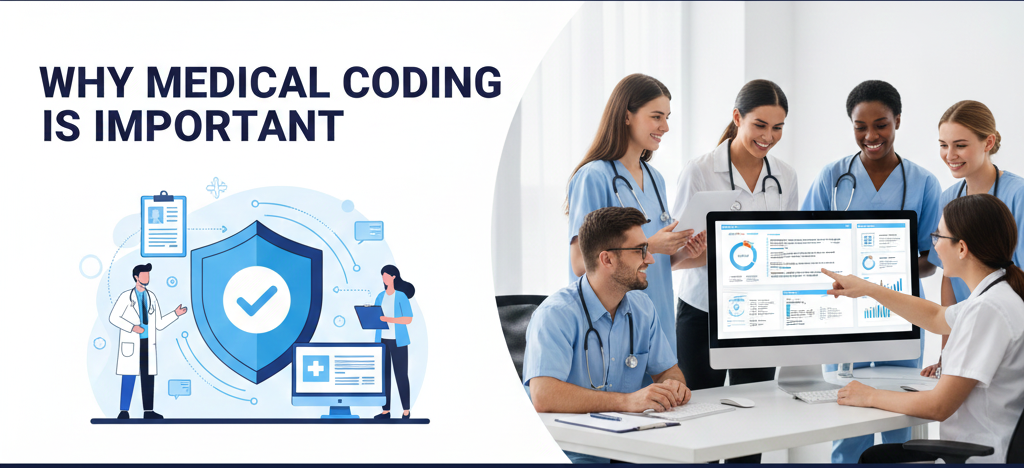
Medical coding is used in hospitals, clinics, and specialty healthcare facilities. After a patient visit, providers document symptoms, diagnoses, tests, and treatments. Medical coders then review this documentation and assign the appropriate codes.
In outpatient environments, clinic coding is especially important due to the high volume of patient visits. Even small mistakes in coding can lead to insurance issues and delayed payments.
Clinic Coding and Documentation Flow
Clinic coding begins once the healthcare provider completes the patient’s visit notes. Coders review diagnosis details, procedures performed, and treatment plans before assigning codes.
When clinical coding is accurate from the start, it reduces the need for corrections later. This helps prevent claim rejections and supports smoother billing and follow-up processes.
Medical Coding Systems Used Today
Medical coding relies on standard code systems so that healthcare organizations and insurance payers use the same language.
ICD-10 codes describe medical conditions, CPT codes explain medical procedures, and HCPCS codes cover medical supplies and certain services. These systems help keep coding health information consistent and understandable.
Types of Medical Coders
Different healthcare settings require different coding skills. This is why there are several types of medical coders.
Inpatient Medical Coders
Inpatient coders work with hospital records and focus on patients who stay overnight or longer.
Outpatient Medical Coders
Outpatient coders handle clinic visits, same-day procedures, and services where patients are not admitted.
Professional Fee Medical Coders
Professional fee coders assign codes for physician services, regardless of where the care is provided.
Specialty Medical Coders
Specialty coders work in specific medical fields such as cardiology or orthopedics and follow specialty-specific coding rules.
Understanding the types of medical coders helps healthcare organizations assign coding tasks accurately.
Medical Billing vs Medical Coding
Medical billing and medical coding are closely related but serve different roles in the healthcare process.
| Medical Coding | Medical Billing |
| Converts medical records into standardized codes | Sends insurance claims for payment |
| Focuses on accuracy and proper documentation | Focuses on payments and follow-ups |
| Works with patient records | Works with insurance providers |
| Affects claim approval | Affects payment timelines |
Errors in medical coding often lead to billing problems, which is why accuracy at the coding stage is so important.
How Long to Become a Medical Coder
Many people interested in healthcare careers ask how long to become a medical coder. The time required depends on the education and training path chosen.
Certificate programs usually take six to twelve months. Associate degree programs may take up to two years. Some employers also offer entry-level training for beginners.
Medical Coding Certificate and Credentials
A medical coding certificate shows that a coder understands coding guidelines, documentation standards, and healthcare rules. Certification can improve job opportunities and professional growth.
Well-known credentials are offered by organizations such as the American Academy of Professional Coders and AHIMA, both widely trusted in the healthcare industry.
Medical Coding in Revenue Cycle Management
Medical coding connects patient care to insurance payment. Accurate codes help claims move smoothly through the reimbursement process.
When coding aligns with approvals and eligibility checks earlier in care, it helps prevent avoidable issues. This relationship is especially important when coding supports workflows like medical authorization within the revenue cycle.
Final Thoughts
Medical coding helps organize healthcare information so it can be billed, reviewed, and reported correctly. From clinic coding to hospital services, accurate coding supports smooth healthcare operations.
Understanding medical coding gives a clearer view of how healthcare services move from patient care to insurance payment behind the scenes.